Murkowski: “I support voter ID — but oppose the SAVE America Act”
Washington, DC—In an opinion piece published in the Anchorage Daily News today, U.S. Senator Lisa Murkowski (R-AK) expressed her support for voter ID but explained why she will not support the SAVE America Act. Senator Murkowski outlined why the bill would be difficult to implement in states like Alaska—especially in time for elections this year.
The full piece can be viewed here at the Anchorage Daily News or read below.
I support voter ID — but oppose the SAVE America Act
By Lisa Murkowski
Election integrity matters, and the right to vote must be reserved for U.S. citizens. So why do I oppose the SAVE America Act, which attempts to federalize voting requirements? The answer is twofold: The Constitution largely leaves it to the states to determine election requirements, and the bill as written would disenfranchise many Alaskans.
In its present form, the SAVE America Act would prescribe the documentation that must be presented to register to vote and then require specific photo identification to be presented when voting. It would also require states to submit their voter rolls to a database maintained by the federal Department of Homeland Security, which would, in turn, tell the states whom to remove.
The problems that will result are both fundamental and practical.
For starters, the Constitution largely entrusts states with the administration and oversight of elections, providing authority to hold them at the “times, places, and manner” of their choosing. This was deliberate because states are best positioned to understand local conditions ranging from geographic constraints to technological infrastructure.
Restricting states’ ability to tailor their election systems to realities on the ground is a recipe for trouble. One size fits all rarely fits Alaska, and it will not in this instance, either. When it comes to elections, what is best for an urban state like Florida may not work in a highly rural state like ours.
Take the bill’s identification requirements. To register, individuals would need specified proof of U.S. citizenship. Tens of thousands of Alaskans lacked a REAL ID last year, when statistics were last reported, but even that is not enough under the current bill, which requires a REAL ID clearly indicating “the applicant is a citizen of the United States.” Alaska’s REAL IDs do not, so you would need to present a passport, certified birth certificate or another valid document that does.
Further, the bill requires individuals to show this proof in person, which can be daunting in Alaska. Eighty percent of our communities and 20% of our population are not on the road system. Under this bill, registering to vote could mean purchasing plane tickets and securing lodging and transportation, at a personal cost of hundreds to thousands of dollars, to travel to one of six regional elections offices, just to be eligible to vote.
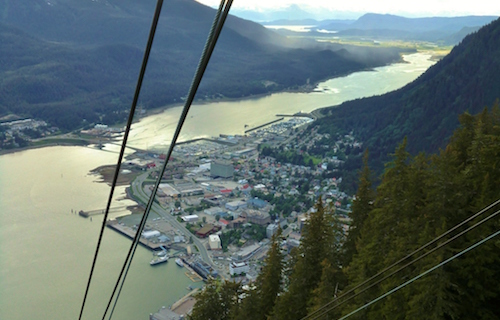
Even for a community as connected as Ketchikan, Alaskans would have to either fly or take the ferry all the way to Juneau just to ensure they can participate in an election.
Registering by mail would likely go away unless and until states can find ways to comply with these new federal requirements. The SAVE America Act would also make it more difficult to vote by mail, something more than 40,000 Alaskans did in the last presidential election.
I agree that voters should verify who they are and strongly support voter ID, as we already require in Alaska, but states are best positioned to know how their residents can do that. Right now, Alaska law does not strictly require photo ID. For example, hunting and fishing licenses are also acceptable.
Under the SAVE America Act, individuals who have changed their last name from what appears on their birth certificate, Alaska Natives relying on tribal IDs and those whose documents do not include a photo, a stated place of birth or an expiration date would all need additional documentation to vote. These requirements would burden voters who may not have other forms of identification and strain election offices that may lack the resources to implement them, especially with this year’s elections fast approaching.
The federal DHS database that would help determine voter eligibility is likewise challenged. According to a recent story from ProPublica, the system is “making persistent mistakes, particularly in assessing citizenship for people born outside the U.S.” Legitimate voters have been flagged, forcing DHS “to correct information provided to at least five states.”
In the meantime, federal law already prohibits noncitizens from voting in federal elections. We should always protect against that, but we do not need to overstate how often it occurs.
Most states have found few instances, and that appears to be the case in Alaska as well. Last year, the Alaska Beacon reported that “a document submitted by the Alaska Division of Elections to the U.S. Department of Justice in response to a nationwide data request (named) 70 possible noncitizens who voted or attempted to vote in state or local Alaska elections since 2015.”
Alaska’s 20-year struggle to implement REAL ID demonstrates just how incredibly difficult the enforcement of federal mandates can be and how unlikely it is that the SAVE America Act could be effectively implemented on an expedited basis.
In 2019, some 14 years after enactment, the state was soliciting donations to help the DMV reach rural communities to bring residents into compliance. Even when mobile DMVs reached rural communities, many residents still could not complete the process. Some homes lacked street numbers. Some names did not match across documents. In parts of the state, delayed or incomplete recordkeeping has left some Native Elders without the documentation required to meet the requirements of the REAL ID Act and what could soon be the SAVE America Act.
Free and fair elections are the cornerstone of our democracy. As doubt is cast on their legitimacy and public trust erodes, we would do well to avoid partisan reforms that sound good on paper but may work very differently in the real world, especially if the result would be a system that works for many but not all Alaskans.
###